Friday, October 21, 2022

Self-Denial? You Gotta' Be Kidding.

The following is the latest review of the adult Sunday School class I've been teaching on Spiritual Disciplines. 

Session #6 -- Self-Denial & Self-Control

“Then Jesus said to them all, “If anyone desires to come after Me, let him deny himself, and take up his cross daily, and follow Me.” (Luke 9:23)

The sixth class in our series covered a difficult subject – not difficult to understand, just difficult to consistently apply.  Indeed, the spiritual disciplines involving self-denial are often the reasons why Christians avoid the matter altogether.  Yes, some have twisted the Scriptures and have also thrown their own errors of pride, legalism, even asceticism into the mix.  But the false teaching of some cannot be allowed to discredit the clear teaching of the Scriptures regarding the profound and ongoing need of Christians to practice disciplines of self-control.

“For the grace of God that brings salvation has appeared to all men, teaching us that, denying ungodliness and worldly lusts, we should live soberly, righteously, and godly in the present age, looking for the blessed hope and glorious appearing of our great God and Savior Jesus Christ.” (Titus 2:11-13)

Please note, however, that the biblical teaching of self-denial is never mere negation. The spiritual disciplines for the Christian are not a matter of “Just Say No” but rather the joyful embrace which “Just Says Yes” to the glorious life God offers us. It is never an end in itself but always the pathway to the positive, the pure, and the enduring.  The Christian never exists in neutral; he or she is either living “in the flesh” (their own power and their own desires) or living “in the Spirit” and making choices based on God’s Word.  The sanctified life is a constant choosing to walk in the light rather than darkness; to act in love rather than self-interest; to show mercy rather than meanness; to exercise faith in God rather than wallow in unbelief, worry, or fear.

The life of the genuine disciple of Jesus Christ is founded upon the same exchange of faith that brought us our salvation.  We repented of our sin and the ownership of our life and, in turn, we received redemption, adoption, and the power of the Holy Spirit.  And in the sanctified life, we continue to live for the Lord in the same way, wisely exchanging our ways for God’s.  To use the Scriptures above – we deny ourselves (the negative) but then take up His cross (the positive).  We deny ungodliness and worldly desires (the negatives which are a curse to us) and choose instead to live sensibly righteously, and godly (the positives which yield peace, power, and heavenly reward). And the plainest proof of all? Self-control is a fruit of the Spirit. (Galatians 5:23) So, as we abide in Christ, His power enables us to make the right choices and to follow through.

Viewed in this perspective, all spiritual disciplines are practices of self-denial.  They are all practices in which we walk in God’s way, rather than our own, trusting in Him to always give us the best and brightest of His blessings.  And as we noted last week, we can never outgive God.  So, the life of self-control should never be seen as a binding, bothering thing.  It is for our good – now and forever.

So why do we not see this?  Well, a basic reason is that our sin nature is a stubborn, stupid beast and it requires a constant check.  And living in America where the advertisement-driven culture works alongside our sin nature is another strong motive for selfishness.  We become insistent on comfort, pleasure, status, having our own way.  We want what we want it now.  In fact, we are constantly told by advertisers that we deserve it!  And so, like Felix who became so frightened by the apostle Paul’s comments about righteousness and self-control (Acts 24:25) that he rejected the opportunity, we too prefer the scanty perks of this life over the bountiful and beautiful blessings offered us by God. 

And about those blessings that flow from a believer’s exercise of self-control? I count three broad categories. 1) A more godly character as noted, for instance in these Scriptures: 

“Discipline yourself for the purpose of godliness.” (I Timothy 4:7)

“Now for this very reason also, applying all diligence, in your faith supply moral excellence, and in your moral excellence, knowledge, and in your knowledge, self-control, and in your self-control, perseverance, and in your perseverance, godliness, and in your godliness, brotherly kindness, and in your brotherly kindness, love. For if these qualities are yours and are increasing, they render you neither useless nor unfruitful in the true knowledge of our Lord Jesus Christ.” (2 Peter 1:5-8)

“But solid food is for the mature, who because of practice have their senses
 trained to discern good and evil.” (Hebrews 5:14)

2) The heightened value of our service to Jesus.  Being a holy vessel.  Righteousness increasing the efficiency of our prayers.  More consistent consecration to the Lord’s purposes.  And all the other ministry benefits which come from maturity.  

And 3) Heavenly rewards as emphasized in such Bible passages as these:  

Moses was “considering the reproach of Christ greater riches than the treasures of Egypt for he was looking to the reward.” (Hebrews 11:26)

“And men will say, ‘Surely there is a reward for the righteous. Surely there is a God who judges on earth.’” (Psalm 58:11)

“Watch yourselves, that you do not lose what we have accomplished, but that you may receive a full reward.” (2 John 8)

Another way of looking at self-denial, self-control, and God’s “exchange program” is to consider the many Scripture passages relating to the avoidance of traps and snares; rejecting the appeals of temptation; “growing up” in our knowledge so that we’re not pushed around by the devil or the world or our flesh.  There’s also the momentous exhortations using the phrase “lay aside” that we see in Romans 13:12 and Hebrews 12:1. In the former, the things we are to “lay aside” (self-denial) are the deeds of darkness which include falsehood, wickedness, and other preoccupations of the “old self”.  But, in the second passage, we are commanded to “lay aside” anything that might encumber us (weigh us down or obstruct our purposes).  Those sins that “easily entangle” us are specifically stressed in that verse. A simple way to picture it?  If it’s not a wing, it's a weight!  So drop it and fly free.  Again, we see that the Bible’s view of self-denial is actually a very positive, proactive perspective.  It’s freedom and confidence and joy…with a whole host of rewards tossed in.

Finally, the class concluded with a brief look at the self-denial discipline of fasting with several important points underscored. For example, there is no biblical commands for the disciples of Jesus to engage in such “extreme fasts” as that practiced by the Lord in his desert temptation.  Instead fasting is presented to us as a discipline that is to be of brief duration, designed for specific purposes, and conducted with humility in contrast to the Pharisees’ tendency to boast of their bold religiosity by making their fasts well known to others.

There are quite practical benefits to the discipline of fasting. These include an increase in the Christian’s ability to delay gratification, thus becoming a more patient, persevering, and focused servant.  It helps redefine the word “need” (which is important in this oh-so-demanding culture) and it helps one orient one’s mind to heavenly realities rather than the incessant, unhealthy pressures surrounding us.

It should be observed also that, though we are not to “show off” our devotion to God by our fasting, it doesn’t mean that our fasts need to be completely private.  Indeed, many of the fasts spoken of in the Scriptures are of a corporate nature.  Esther called on others to fast prior to her risking her life to intercede for the lives of the endangered Jews.  The prophet Joel urged the faithful to fast to accompany their prayers that a plaque of locusts be removed.  The elders at Antioch fasted (apparently as a group) before conferring their blessing on Paul’s missionary activity. And so on.

Consider too that the principle of fasting doesn’t exclude things other than food.  Paul describes married couples, for instance, as abstaining from sexual relations for a short time as a special prayer project.  And Daniel’s 3-week fast wasn’t from all food but instead only the rich menus of the court (“the bread of desirability.” Note this too, it was also a fast from the use of ointment. And, especially in keeping with our previous observations about laying aside every spiritual obstruction, I would suggest that Christians strongly consider fasts of other types.  What about the hours spent in front of the TV?  Can you imagine how family life could be revolutionized if husbands fasted from televised sports and instead spent time in the Word, in service for Christ, and in fellowship with their family?

And one last point about fasting, something that is in keeping with the rest of the case we’ve made here about Christian self-denial being a positive exchange of our lusts and burdensome luggage for God’s rewards. 

“Is this not the fast which I choose, to loosen the bonds of wickedness, to undo the bands of the yoke and to let the oppressed go free and break every yoke? 
Is it not to divide your bread with the hungry and bring the homeless poor into the house -- when you see the naked, to cover him and not to hide yourself from your own flesh? Then your light will break out like the dawn and your recovery will speedily spring forth and your righteousness will go before you. The glory of the Lord will be your rear guard. Then you will call, and the Lord will answer.  You will cry, and He will say, ‘Here I am.’” (Isaiah 58:6-9)


Friday, October 14, 2022

Managing God’s Assets (Review of Session 5 in the Spiritual Discipline Class)

Remember these lines from the Barry Gordy song Money, popularized by the 1963 Beatles version?  

The best things in life are free but you can give them to the birds and bees.
I need money. (That's what I want.)
That's what I want. (That's what I want.)

Your love gives me such a thrill but your love don't pay my bills.
Money don't get everything, it's true. But what it don't get, I can't use.
Now give me money! (That's what I want.)
That's what I want.

Well, as you might suppose, we took a bit different tack in last week's Sunday School class that I've been teaching on spiritual disciplines. Following is a review of that class. I hope you find it of value.

--------------------------------------------------------

The spiritual disciplines related to stewardship must find their start in an “attitude of gratitude” or, to put it another way, note that even with the word itself “giving” will always be a part of “thanksgiving”.  Indeed, a recognition that God’s blessings on His children are bountiful, constant, and forever provides not only a foundation for praise and appreciation, but also a motivation for us to follow His commands to be generous, purposeful, and happy in our giving to others.

G.K. Chesterton observed that a lack of gratitude is the root of all sin.  An exaggeration? Not if you consider that Romans 1:21-32 underscores the same profound reality. Living a life of thanksgiving then is of paramount importance.  We recognize God as the source of all that we have and we express our thankfulness to Him in both word and deed.  

“I will give thanks to the Lord with all my heart; I will tell of all Your wonders. I will be glad and exult in You; I will sing praise to Your name, O Most High.” (Psalm 9:1,2)

“I shall wash my hands in innocence and I will go about Your altar, O Lord, that I may proclaim with the voice of thanksgiving and declare all Your wonders.” (Psalm 26:6,7)

“Enter His gates with thanksgiving and His courts with praise. Give thanks to Him, 

bless His name. For the Lord is good; His lovingkindness is everlasting and His faithfulness to all generations.” (Psalm 100:4,5)

“But I will sacrifice to You with the voice of thanksgiving. That which I have vowed I will pay. Salvation is from the Lord.” (Jonah 2: 9)

Note in the Scriptures above (and so many others) how thanksgiving is linked to a devotion to testify to God’s wonders, to the loving kindness and faithfulness of God, and to our willingness to live a sanctified life.  Thanksgiving is certainly a foundation for our effective discipleship.  In fact, as our awareness of God’s character grows and our appreciation of His innumerable blessings to us increases, we become closer to those faithful stewards that Jesus describes in His parables.  

Randy Alcorn describes a steward as “someone an owner entrusts with the management of his assets.”  And the first thing to understand in this excellent definition is God’s ownership of absolutely everything – all of nature, all in the angelic realms, and even everyone of us.

“The earth is the Lord’s, and all it contains, the world and those who dwell in it.” (Psalm 24:1)

“Behold, to the Lord your God belong heaven and the highest heavens, the earth and all that is in it.” (Deuteronomy 10:14)

“So David blessed the Lord in the sight of all the assembly; and David said, ‘Blessed are You, O Lord God of Israel our father, forever and ever. Yours, O Lord, is the greatness and the power and the glory and the victory and the majesty, indeed everything that is in the heavens and the earth; Yours is the dominion, O Lord, and You exalt Yourself as head over all. Both riches and honor come from You, and You rule over all, and in Your hand is power and might; and it lies in Your hand to make great and to strengthen everyone. Now therefore, our God, we thank You, and praise Your glorious name. But who am I and who are my people that we should be able to offer as generously as this? For all things come from You, and from Your hand we have given You. For we are sojourners before You, and tenants, as all our fathers were; our days on the earth are like a shadow, and there is no hope. O Lord our God, all this abundance that we have provided to build You a house for Your holy name, it is from Your hand, and all is Yours.’” (1 Chronicles 29: 10-16)

“Who has given to Me that I should repay him? Whatever is under the whole heaven is Mine.” (Job 41:11)

“Or do you not know that your body is a temple of the Holy Spirit who is in you, whom you have from God, and that you are not your own? For you have been bought with a price: therefore glorify God in your body.” (1 Corinthians 6:19,20)

God owns it all. He created it all. He sustains it all. Furthermore, God’s graciousness and generosity is so abounding that we could never “out-give” Him.  

“Do not be deceived, my beloved brethren. Every good thing given and every perfect gift is from above, coming down from the Father of lights, with whom there is no variation or shifting shadow.” (James 1:17,18)

“He who did not spare His own Son, but delivered Him over for us all, how will He not also with Him freely give us all things?” (Romans 8:32)

No, God blesses us with more than we can count, more than we can imagine, much more that we could ever give back to Him.  And yet this Almighty God invites you and me to participate in His holy service to the world as His honored stewards.  He gives us the responsibility of managing His assets and, as those parables Jesus teaches so clearly emphasize, God wants us to exercise these elements of the good steward: humility; understanding always that the assets are God’s, not ours; wisdom; generosity; industriousness; vision; skill; and gratitude.  Furthermore, we are to never forget our accountability to the Master. And to anticipate that He is returning to evaluate (and, when it is called for, reward) our performance.

Obviously, our stewardship responsibilities involve what we do with God’s money.  But we must wisely manage and invest all else He has given us as His disciples. Time. Talents and spiritual gifts. Opportunities. Relationships. Passions and priorities. And yes, money too. 

Did you know that the Bible actually talks more about money (especially, our attitudes towards it) than about the topics of heaven or hell or the gospel? It’s true. But, although that’s an important study, with the short space we have in this class, let me point you to three Scriptures I think are especially relevant. In Acts 20:35 the apostle Paul quotes Jesus as saying, “It is more blessed to give than to receive.”  That simple statement, buttressed by His many other teachings on giving, greed, simplicity of life, the snare of wealth, and so on reminds us of how important it is to be generous in our giving.  And to give with ongoing trust in Christ’s care for us and the rewards He is storing up for us in heaven for the generosity we show now.  It’s also noteworthy that the context of Paul’s remarks includes the priority of helping the needy and the need for industriousness and sacrifice so that the giver can do so more abundantly.

Luke 11:42 has important warnings about our giving too as Jesus sharply rebukes the Pharisees for alms-giving out of all the wrong motives.  “But woe to you Pharisees! For you pay tithe of mint and rue and every kind of garden herb, and yet disregard justice and the love of God; but these are the things you should have done without neglecting the others.”  These hypocritical false teachers were giving to impress God, to earn His favor, and to show off to others. But Jesus shows here (and in many other instances) that He demanded giving that was pure of heart, generous, relevant to the greatest needs, and directed ultimately to Him. Only such gifts would find heavenly rewards. 

And then there is the wonderfully revealing Chapter 9 of 2 Corinthians. Read it carefully and you’ll note that there are several things to learn and follow. For instance, generosity should be carefully planned. Our giving should be bountiful even as we can rely on God to be bountiful in His giving to us. The target of giving in this case was Christians who were experiencing severe needs; we should observe that same priority in our giving. Giving must always beware of the lurking temptations of covetousness and pride. And only that giving which comes from a pure heart will glorify God. 

And one more item. Included in that chapter (verse 7) is one of the most helpful exhortations in this matter.  The Greek word translated “cheerful” here is “hilaros” and while it doesn’t mean rip-roaring hilarity, it does signify a joyful, readiness of mind.  Thus, God loves the giver who is careful but prompt, who isn’t stingy, who isn’t boastful. Rather, the Lord loves the giver who understands that, when all is said and done, he is but a faithful steward of God’s assets, investing them for the Father’s use and in view of heavenly rewards.

The class concluded with a few additional guidelines about giving. 

* Never forget that the steward’s giving is to be wholistic.  Everything we have been given is to be managed, protected, kept pure, and invested in God’s kingdom. Money.  Time. Spiritual gifts.  Opportunities.  Relationships.  Attitudes.

* As with all spiritual disciplines, careful planning is necessary.  Don’t waste your money on foolish things.  Avoid spending your money in ways that would enrich evildoers.  Be circumspect in giving to organizations and individuals, making sure they are themselves acting according to righteous standards.

* Note biblical examples which would suggest that priorities of our giving be made to missionary support (The Lord’s servants committed to the Great Commission) and to the needs of the poor, sick, and persecuted, especially those in the household of faith.

* Beware an “automatic withdrawal” attitude towards giving. Rather, be purposefully involved with those who you give money and time to.  Check on them.  Pray fervently for them. Support them in other ways than money when you can.  Enlist others in their support.

One last item. Living in this era, we are constantly inundated by advertisements and the “passion for fashion.” Both breed dissatisfaction, envy, greed, and an overarching lack of gratitude.  We must fight this enemy all the time. Otherwise we will be distracted, dispirited, and worthless stewards. Let us instead carefully cultivate that “attitude of gratitude” that will fill us with thanksgiving, contentment, confidence, generosity, and an enthusiastic anticipation of the rewards to come our Master will bring with Him when He returns!

Thursday, October 13, 2022

Review of Session 4 of the Spiritual Disciplines Class: Prayer

The spiritual discipline which is prayer should be a given to anyone with even a cursory understanding of the Bible. After all, the heroes of the Bible constantly demonstrate lives of prayer throughout both Testaments.  From the patriarchs to the prophets, from the kings to the military champions, from Jesus Himself and His apostles, we see prayer as an indispensable practice.  Furthermore, in the Scriptures, we are specifically (and frequently) commanded to pray.  We are even given specific prayer targets: the Lord’s will, one another, our daily needs, thanksgiving, our enemies (even those who persecute us), the peace of Israel, laborers for the kingdom’s harvest fields, and so many more.  Prayer, we see again and again, is the antidote to anxiety, to losing heart, to selfishness, and worldliness. It is a key path by which the believer finds God’s guidance, protection, and intimacy.  

Yet even with this matter established in our minds, we must confess that prayer is too often a matter of weakness, frustration, and guilt for modern Christians. Why is this?  Well, one reason is that we don’t really understand prayer very well.  We haven’t been “schooled” in the basics and so when we’ve tried to put our ideas into practice, they fall flat.  We end up either accepting an inconsistent mediocrity or we forgo prayer altogether – except in emergencies or when company is present and we feel the need to “say grace” at the dinner table!

There are other reasons for an ineffective life of prayer.  We live divorced from an awareness of the supernatural.  Yes, even Christians get used to thinking that life is a matter of self-sufficiency. Heartfelt prayers for daily needs, guidance, and strength are therefore foreign to us.  Some also deal with a lack faith, or of ongoing sin in their lives which keep them embarrassed from coming to the Lord for a conversation. They may feel a definite unwillingness to hear what God may have to say or a fear that God will not “answer” their prayers the way they want.  

The answers to these obstacles are actually quite simple but we have to seriously desire things to change in order for success in prayer to begin.  Those answers are 1) become properly informed about prayer, and 2) start praying! Yes, get started. Even when it seems awkward or irregular, you must realize that you will never become confident and comfortable in prayer unless you start exercising what you are learning.

As you can guess, one of the most elementary lessons in the “school of prayer” is also the most necessary. You must become better acquainted with the God you’re praying to. Focus in on the wonderful truths that the God of the Holy Scriptures is a God of overwhelming and enduring mercy.  He is always eager to listen to those who have by faith received Jesus as their Savior.  Indeed, through the sacrifice of Jesus on our behalf, our sins are completely and forever forgiven. Thus we are guaranteed complete and immediate access to the Father.  No penance is required before we pray.  No workup of emotions.  No religious bribery to persuade Him to give us a few minutes.  No mediator is needed nor is any special sentiment or atmosphere.  Our all-powerful, all-gracious Father is always there and eager to spend time with us.

Psalms 145:17-19 – “The Lord is righteous in all His ways, gracious in all His works. The Lord is near to all who call upon Him, to all who call upon Him in truth. He will fulfill the desire of those who fear Him; He also will hear their cry and save them.”

1 John 5:13-15 – “These things I have written to you who believe in the name of the Son of God, that you may know that you have eternal life, and that you may continue to believe in the name of the Son of God. Now this is the confidence that we have in Him, that if we ask anything according to His will, He hears us. And if we know that He hears us, whatever we ask, we know that we have the petitions that we have asked of Him.”

Job 22:25-28  – “Yes, the Almighty will be your gold and your precious silver.  For then you will have your delight in the Almighty and lift up your face to God. You will make your prayer to Him; He will hear you and you will pay your vows. You will also declare a thing and it will be established for you; so light will shine on your ways.”

Of course, another critical element to learn about prayer is that that our purposes of prayer are often quite different than those of God.  We tend to focus on “presents;” that is, what God can give us or do for us.  However, His priority is “presence.” He wants us to find comfort and strength simply by sharing in His presence, experiencing a fellowship with the One Who saved us from the penalty of our sins and Who through “His divine power has given to us all things that pertain to life and godliness, through the knowledge of Him who called us by glory and virtue.” (2 Peter 1:3) Spending time with God.  Honestly laying your concerns and needs and ideas before Him even as you put your humble, confident trust in Him to achieve His glorious will in your behalf. That is the most significant and far-reaching of the blessings coming from prayer. Being occupied with God rather than being occupied by our questions and requests.  This is how to be successful in folding prayer into day-to-day life.

As you diligently pursue the pilgrimage of prayer (as instructed in the Bible), your prayers will become more characterized by a love of truth, a willingness to obey His Word, heavy doses of thanksgiving and praise, intercession for others, deeper humility and trust, and an ever-growing intimacy with the Lord Jesus that sees you placing all areas of your life into His hands.  Your prayers will be conversational – not ritualistic repetitions or stilted religious rhetoric.  You will become comfortable with short prayers as well as longer conversations.  You will find yourself looking for prayer opportunities – in the car, on the patio, in groups of Christian friends, in planned “devotional” exercises, and in spontaneous appeals for help or praise. Like in any relationship, your conversation becomes easier and more fruitful as you become familiar with the other person. And as the comfortability and significance of your prayer experience grows, so will your desire to live godly – in all areas of your life.

Now there are many, many more things to be explored about prayer – confession, vows to God, public prayers with one’s spouse and children (extremely important), and so on.  But of highest value are those two things we underscored earlier – becoming better informed about prayer and starting in to build a stronger, more natural prayer experience.  In both, cherish the fact that God is on your side and that He wants you to succeed in becoming more “conversant” with Him.  Furthermore, He is a God of great grace Who offers forgiveness and fresh starts over and over again.

“Dear Lord, please help me to become better in my prayer life.  Motivate me to ‘go to school’ on the subject through Bible study, help from Christian friends, and a renewed devotion to the adventure.  And help me to embrace the grace that you give for my weak prayers of previous days and for the new, fresh power You offer me to start again and to become better in this key area of the sanctified life.  In Jesus Name, Amen.”

Wednesday, October 12, 2022

There The Democrats Go Again

In one of the many political ads paid for by the Nebraska Democratic Party, the claim is made about Congressman Don Bacon that his "extreme anti-choice bill will endanger women’s lives.”  Well, any thinking person recognizes that this is a gross lie.  

But then, the modern Democratic Party isn’t going to back down from telling lies.  It’s all they’ve got.  Lies about preborn babies.  Lies about inescapable biological realities.  Lies about socialism.  Lies about crime and the police.  Lies about the Constitution.  Lies about viruses and lockdowns.  Lies about illegal immigration.  Lies about election integrity.  Lies about what’s happening (and what’s not happening) in government schools.  Lies about their political opponents and lies about themselves.

So, yes; they will continue to lie even as they hope that there are enough unthinking sheep out there to believe them.

Let’s take this pro-abortion ad from Nebraska Democrats as an example.  First of all, the bill they are referring to is a simple, compassionate, common sense, fully Constitutional, and scientifically impeccable bill that would not endanger anyone or anything unless, that is, you’re talking about it limiting the profits of such racist, sneaky, and violent abortion profiteers as Planned Parenthood.

For again, any thinking person knows that pro-life bills do not in any way actually endanger women’s lives. Hardly. They do, in fact, seek to save untold numbers of women’s lives that, if the Democrats were to keep having their way, would be cruelly ended by the abortionist’s suction machines and curettes and chemical poisons.  Women's lives and needs matter – most certainly.  But so do the lives of preborn girls and, while we're at it, preborn boys as well.  And, make no mistake, the pro-life bills like those supported by Congressman Don Bacon will compassionately serve the needs of them all.

Wednesday, October 05, 2022

An Apostolic Argument (Acts 15: 36-41)

"An Apostolic Argument" is a brief sermon that Denny presented dealing with a fascinating New Testament passage, Acts 15: 36-41. How could it happen that two heroic leaders of the early Church experience such a dramatic difference in opinion? And how could these men who had worked so bravely and effectively together in the immediate past actually torpedo a proposed mission together and head off in their own directions? And what does this historical incident mean for we Christians today?

Denny has some important answers, some wise counsel, and a few terrific surprises in this presentation. Check it out.

Saturday, October 01, 2022

Bible Interaction: A Review of Session 3 of the Spiritual Disciplines Class

Authentic spiritual disciplines begin with the Bible.  Indeed, for the Christian, the Word of God is not only the source for all spiritual disciplines, but those disciplines are explicitly directed and thoroughly empowered by experiential knowledge of the Bible.  Yes, there are many in our day who choose instead the mystical disciplines of Eastern religion – seeking to empty themselves and become one with the universe.  And there are even those who wear the title of Christian who utilize rites, rituals, readings, prayers, atmosphere, and other religious exercises which are not, in fact, organic to the Bible. But both of those routes lead nowhere. No, the definition of and the directions for Christian discipleship are revealed only in God’s Word.  

Matthew 7:24, 25 -- “Therefore, everyone who hears these words of Mine, and acts on them, will be like a wise man who built his house on the rock. And the rain fell and the floods came, and the winds blew and slammed against that house; and yet it did not fall, for it had been founded on the rock.

John 8:31,32 -- “So Jesus was saying to those Jews who had believed Him, ‘If you continue in My word, then you are truly My disciples; and you will know the truth, and the truth will set you free.’”

1 Timothy 4:6 -- “In pointing out these things to the brothers and sisters, you will be a good servant of Christ Jesus, constantly nourished on the words of the faith and of the good doctrine which you have been following.”

Those are just a few of the myriad Scriptures which testify to the foundational nature of the Bible for day to day Christian living. 

Let’s keep things straight. Conversion transforms the repentant sinner from the kingdom of darkness to God’s glorious, liberating kingdom of light.  But sanctification (that is, the Christian life wherein the disciple submits himself daily to the Lord’s will) produces a transformation that is evidenced by growth in character and consistency in godliness.

Bible learning is, therefore, a must.  And while that is normally understood to involve Bible reading, it should be noted that even the illiterate, the severe dyslexic, the young child, the blind, and those that do not have a Bible translated in their language can still receive Bible teaching if they have, as the need requires, an audio source, a reader, a preacher, or a translator.  

I make this point for 3 reasons.  1) To encourage the use of audio versions of the Bible for those who cannot read, or who have great difficulty in reading, or who are engaged in normal activities where they cannot turn pages, as in walking or driving or ironing or working on the car.  2) To emphasize the tremendous, life-changing value of being a Bible reader to the young, to the aged, and others whose management of the written word is limited.  And 3) To suggest that reading the Scripture aloud is not only a very helpful service for others, but it can be of great effect in one’s own understanding and appreciation of the Bible, not to mention the help it can be to memorization.

But never forget that the goal of learning the Bible is that of any other authentic spiritual discipline; namely, a life more conformed to the life of Jesus Christ.  One must not allow Bible reading to be an end in itself. What does matter is getting into the Bible so that the Bible gets into you!  It’s quality of life change, not the quantity of verses read.

Learning the Bible changes your view of the world, your view of self, your view of God.  As your mind is renewed (Romans 12:2), you will discover all those blessings promised in the verses of Psalm 119: delight, joy, protection, godliness, escape from temptations, victory, divine counsel, discernment, single-mindedness, deliverance from enemies, avoidance of traps, heavenly rewards, and more.  Becoming familiar with the Holy Scriptures will thus make you a better ambassador for Christ, a stronger warrior, a more humble servant, a more loyal and joyful son or daughter, a more trustworthy and more valuable steward, and a more confident and adventurous pilgrim. So get into the Word!

Now, there are many approaches to Bible reading.  There are a large variety of reading plans, devotional booklets, study guides, and read-through-the-Bible programs.  The important thing is to use something!  Get into the Word consistently.  Build your skills and perseverance.  Be disciplined as a disciple must be.  And even though there will be failures along the way, the Lord is a loving, merciful God Who abounds in forgiveness and fresh starts.  Therefore, the authentic disciple of Jesus embraces God’s grace and continues to try. To help you stay with it, go with practical, do-able approaches.  Stretch your spiritual muscles and get better over time.  Use the encouragement, assistance, and accountability of others to stay the course.  And keep asking God to move you forward and to have His Word do a great work in your mind and heart.

What about Bible study, doing more than just reading? I’m all for it because Bible study is certainly for all believers.  It’s not only for the pros, or the mature, or for Christians with certain gifts or backgrounds or personality types. Serious Bible study is a mark of all successful disciples.

2 Timothy 2:15 -- “Be diligent to present yourself approved to God as a worker who does not need to be ashamed, accurately handling the word of truth.”

Acts 17:11 -- “Now these people [the believers of Berea] were more noble-minded than those in Thessalonica, for they received the word with great eagerness, examining the Scriptures daily to see whether these things were so.”

The motivations for a more careful, investigative study of Scriptures may come from many sources but whatever gets one started, consider these 4 keys to hermeneutics (the science of Bible interpretation). 1) Patient study.  Briefly put, this means go slow; don’t jump to conclusions; don’t allow one source to cement your interpretations too quickly; be careful of your prejudices and presuppositions.  Take your time and be honest, humble, and thorough enough to let the scriptures explain themselves.

2) Context.  One of the primary reasons to go slow is to let you better appreciate the context of any given word or verse or passage before you start making interpretative conclusions and applications.  The Bible is literature, written in different genres, and yet designed by God to interconnect in overarching themes and conclusions.  If you go too fast or are too lazy to read what surrounds that particular word or verse or passage, you’ll likely miss the point.  Oh, how much theological error could be avoided if students simply paid attention to the context.

3) Assemble the team.  To accurately interpret the Bible, you need the Church.  For instance, you must start with the linguists who were well-versed enough in the Bible’s original languages to give you an accurate translation. You also need scholars of history, archeology, geography, science, and many other academic disciplines in order to get the full story of God’s revelation.  You also need mature Christians who have been studying (and applying) the Bible for many years, people who are willing to enlighten and encourage you.  

Take my “study team” as an example. I begin with the scholars who translated my NASB and NKJV Bibles. I also like to read Kenneth Wuest’s translation of the New Testament. But there are also on my team many other scholars who have written word studies, Bible commentaries, devotionals, history, books on practical Christian living. and many, many other important contributions. And there are also the teachers and preachers I’ve listened to on the radio and tapes, and those I’ve enjoyed in person through sermons and classes.  And, not at all to be forgotten, are my team members who are simply “good friends and true” whose love for God’s Word makes them excellent counselors and coaches and encouragers.

And finally, though you may think I’m repeating myself too often on this point, 4) the purpose of Bible study is a changed life.  The true disciple pursues the spiritual discipline of Bible reading and study not to master the Word, but so the Word’s mastery of him becomes more consistent, profound, and rewarding.

Now finally, a quick note about Bible memorization.  Let me say up front that I believe memorization to be of great value, but only if the application of those verses is showing up in one’s daily life.  Ongoing involvement with the texts of Scripture is always of greater value than merely remembering them.  So, rather than concentrating on mere memory, get involved with the Bible texts.  Write them down where you have frequent access to them.  Study them.  Think about them.  Think about their content and applications.  Use them in your prayers.  Talk to others about them.  All of these things are more valuable than simply being able to recite the verses. And yet, with that said, it’s also true that the greater your familiarity and appreciation is of those texts, the easier it will be to go ahead and make memory verses out of them!

Hebrews 4:12 -- “For the word of God is living and active, and sharper than any two-edged sword, even penetrating as far as the division of soul and spirit, of both joints and marrow, and able to judge the thoughts and intentions of the heart.”

Thursday, September 29, 2022

A Relevant Rundown: Some of the Best of Recent Reporting (Part 3)

* "Biden nears 100 executive orders estimated to cost taxpayers almost $1.5 trillion" ( Joe Schoffstall & Houston Keene, Fox News)

* "Joe Biden's 'beyond tone-deaf' inflation party" (Byron York, Washington Examiner)

* "Brace Yourself: Food Shortages Will Be a Reality in the West This Winter" (Stacey Lennox, PJ Media)

* "This Is Why Conservatives Can't Stand Paying for PBS" (Tim Graham, NewsBusters)

* "America Delira: We went mad because we easily could. And we could, not because we were poor and oppressed, but because we were rich and bored." (Victor Davis Hanson, American Greatness)

* "Why doctors aren't speaking out: Written by a doctor. Everyone should read this. We are headed for a perfect storm with escalating health needs and a shortage of doctors because of how we treat them." (Steve Kirsch)

* "Disney-owned cartoon features Antichrist daughter, mother who slept with Satan" (Kevin Haggerty, BPR)


A Relevant Rundown: Some of the Best of Recent Reporting (Part 2)

* "From Jussie Smollett to BYU, the media's history of peddling race hoaxes" (Joseph A. Wulfsohn, Fox News)

* "Unholy Alliance: In Chicago, the city’s largest children’s hospital has partnered with local school districts to promote radical gender theory." (Christopher F. Rufo, City Journal)

* "The World Wants No Part of Woke, but It’s Glad We Do" (Victor Davis Hanson, Daily Signal)

* "Stacey Abrams says 'no such thing' as 6-week fetal heartbeat: 'Manufactured sound'" (Timothy H.J. Nerozzi, Fox News)

* "The Bidenomics Sham Is Collapsing" (Editorial Board, Issues & Insights)

* "Germany is committing national suicide: An eco-obsessed elite has sacrificed energy and food security to the climate agenda." (Ralph Schoellhammer, spiked!)

* "Lawmakers blast Army soldier food stamp suggestion amid Biden’s student loan handout: 'Outrageous'" (Houston Keene, Fox News)

A Relevant Rundown: Some of the Best of Recent Reporting

* "FBI Agents Raid Home, Arrest Pro-Life Advocate in Front of Wife and Children" (Gillian Richards, Daily Signal)

* "Biden’s $420B student loan boondoggle is blatantly illegal — but progressives don’t care" (Andrew C. McCarthy, Fox News)

* "14 Things We Know About the Mysterious “Explosions” That Severely Damaged the Nord Stream 1 and Nord Stream 2 Pipelines" (Michael Snyder, America First Report)

* "Dallas doctor dubbed 'medical terrorist' after caught tampering with IV bags" (Rebecca Rosenberg, Fox News)

* "Democrats need to stop urging political violence" (Karol Markowicz, New York Post)

* "Who Gets Hurt From High Gas and Diesel Prices? There’s More Harm Than You Think." (Daren Bakst & Rachael Wolpert, Daily Signal)

Monday, September 26, 2022

On Spiritual Disciplines (Session Two) -- "Purposeful Planning Produces"

Before the Christian disciple starts firing at the targets of spiritual discipline, he must be ready, and he must take careful aim.  Indeed, he needs to know just what his targets are!  And thus enters the indispensable matters of intentionality and planning. As the apostle Paul describes it in I Corinthians 9:26, he doesn’t run aimlessly; he doesn’t box as if he were beating mere air.  No, his passionate desire to pursue godliness moves him to organize his priorities and strategies to reach that goal. 

Taking the responsibility to plan is underscored in several of the proverbs.  “The plans of the diligent lead surely to advantage” (Proverbs 21:5a); “Commit your works to the Lord and your plans will be established” (Proverbs 16:3); and “Without consultation, plans are frustrated but with many counselors they will succeed” (Proverbs 15:22).  Of course, those plans are always to be made with wisdom, in keeping with God’s overall will, and with earnest dependence on the Lord to work His purposes in (and beyond) our plans.  Such proverbs as 19:21, 16:6, and several others remind us of God’s overreaching control of our lives.  Nevertheless, we are also to make careful plans to pursue godliness.

The biblical metaphors are quite clear.  The athlete plans, the farmer plans, and so too do the king and commander.  And so must the disciple plan with a commitment to then follow through as God directs and empowers.

Let me share a personal illustration of how planning works. Every Christmas season Claire and I mix into the myriad of our Yuletide activities the making of New Year’s Resolutions.  Those resolutions are prayerful plans within several categories of our life and ministry: Bible reading, prayer, purposefulness in friendship, diet and exercise, correspondence, thanksgiving, reading, family, home projects, Vital Signs Ministries projects, church involvement, giving, and a few more.  But we’re not done with simply making resolutions; we also do quarterly evaluations of each one in order to grade our progress, to make adjustments, and to re-dedicate ourselves to the vows we’ve made to God and to each other.

Why try to be so organized?  Why be so thorough?  Well, it’s because we have learned the profound truth of the old adage, “If you aim at nothing, you’re sure to hit it!” But if one is more purposeful, more thorough, and more invested in making his whole life a faithful stewardship for his King, there will be greater success, consistency, and joy in one’s spiritual disciplines.  

Planning produces.

Of course, before one can take effective aim at spiritual disciplines, he must be ready to diligently pursue them. The believer in Christ must truly want to become a disciple. He or she must have an authentic desire to grow, to be better equipped, to be more effective in their spiritual pilgrimage.  There’s no use in planning disciplines if you’re not ready to live “all out” for God, if you’re not willing to be trained to win the race.

Are you going to hang on to encumbrances and entangling sins (Hebrews 12:1)?  Then you’ll not be a true disciple. Are you hoping to just do enough to “get by”?  Then you’re sure to drift backward rather than move forward.  Are you insistent on bearing the name of “disciple” while refusing to bear the responsibility to sacrifice, to on the armor of God and serve as Christ’s warrior, to bravely serve the cause of the Spirit rather than the desires of your flesh?  Then you will certainly remain as you are – a disciple in name only.  You’ll not be a loyal ambassador whose future includes the gracious (and glorious) rewards the King desires to bestow on His faithful servants.

So, how does one get ready?  Where does the inspiration come from to go deeper and further in one’s adventure with the Lord?  The answer, of course, is the movement of the Holy Spirit in our lives as He enlightens, convicts, corrects, and draws us into the Word of God. That’s where our hearts will be quickened and our minds instructed regarding the “stuff” of spiritual disciplines.  And the Spirit will do that drawing through many means -- in our Bible reading and study, the hearing of a sermon, the reading of a book, the testimony of another brother and sister, a heady success, a terrible failure, and so on.  He is our Teacher Who opens to us the possibilities of growing in Christ.  But inspiration might also come from the example of a mentor, or the godly counsel we receive in answer to a problem, or “how to” instruction to what we know is a need in our lives.  

Oftentimes, it is a crisis that reveals our need for correction, for greater depth of purpose, for more intense effort.  For instance, there’s nothing like a doctor’s x-ray showing a spot on one’s lung to create a motivation for the discipline to stop smoking! But, of course, it’s always best to be motivated to change our attitudes, priorities, and habits towards holy standards before a crisis requires it.  So, let’s pay careful attention to being ready right now!

And being ready, let’s now take aim at spiritual disciplines.  And aiming necessitates choosing your targets and zeroing in your scope.  In other words, it’s time to make plans. The word translated as “plan” appears over 200 hundred times in Holy Scripture.  God was a planner.  Joseph and Moses and Joshua and Nehemiah and David and Daniel and Luke and Paul were planners.  And Jesus’ disciples, including you and me, are instructed throughout the New Testament and Old to plan.  Don’t beat the air.  Don’t be double-minded.  Count the cost.  Invest in heaven’s treasures.  Be wise as serpents. Don’t run aimlessly. And more.

So as you consider the spiritual disciplines of Bible reading, giving, prayer, service, Bible study, thanksgiving, fasting and feasting, memorization, meditation, and so on, take careful aim by considering your options, talking to mentors and fellow pilgrims, bringing your needs before God in prayer, and then begin with a view to evaluate and adapt as you go. In all areas, planning produces.

Tuesday, September 20, 2022

On Spiritual Disciplines: The First Session

Are spiritual disciplines really that important to a successful Christian life? Whatever your opinions might be on that question, I encourage you to check out the series I start here on Vital Signs Blog today. It will be the first of 8 in which I give a summary view of the adult Sunday School class I'm presenting on this topic. Of course, I'd love to have you in the class...but this is the next best thing.


Spiritual Disciplines – Session One: “The Why of Spiritual Disciplines”


1) Spiritual disciplines are not particularly popular with modern Christians.  Some fear they represent a Pharisee-like attitude; that is, going through certain rules and rituals in order to earn God’s favor and perhaps also to show off their “holier than thou” status.  Yet other Christians are uncomfortable with the topic because they fear the influence of Eastern mysticism, believing that talk of spiritual disciplines smacks too much of an esoteric, ascetic, even extrasensory path to encounter God.


However, both of these fears are a far cry from the biblical case for spiritual disciplines.  Indeed, it’s the devil who wins (and we who lose) when we allow Satan’s lying propaganda to mislead us regarding those disciplines God clearly commands to believers. Indeed, as Baptist theologian Don Whitney puts it, “The spiritual disciplines are those practices found in Scripture that promote spiritual growth among believers…they are habits of devotion, habits of experimental Christianity.”  He continues, “Although God will grant Christlikeness to us when Jesus returns, until then He intends us to grow towards it.  We aren’t merely to wait for holiness, we’re to pursue it.”


2) Discipline according to my old dictionary is a) training that develops self-control, character, or orderliness b) treatment that corrects or tames.  And words from the thesaurus connected to discipline include training, cultivation, self-control, prepare, instruct, and correct.


But what’s the real deal about spiritual disciplines?  Well, as is apparent from the words themselves, discipline is simply the “stuff” of the true disciple.  It is the convictions, attitudes and lifestyle of the faithful disciple of Jesus.  Therefore, I sometimes describe spiritual disciplines as “Obedience: Purposefully and Consistently Applied.”  They are the ongoing practices of one who is seriously pursuing the Christian adventure, the one who takes “the longer view” and is investing his time, talents, and treasure in the life to come.


3) And therein lies the most common resistance of all regarding spiritual disciplines – not fear of being a Pharisee or a vegan yoga sitting in the lotus position in a far-off cave, but simply resistance to the effort, sacrifice, patience, humility, and perseverance necessary to purposefully pursue godliness.  Let’s face it, way too many Christians don’t want discipline.


We prefer an easy, instant, spontaneous, self-congratulatory approach to the Christian life.  Furthermore, many others avoid the matter of discipline because we have tried and failed too many times and so we live a life of timidity, compromise, and mediocrity instead of appealing to God’s grace for yet another start. But the Holy Spirit will stay ever with us, convicting us and calling us to the adventure of being a genuine disciple of Christ.  That call is for all of us.  And that call is for today.


4) There has, throughout the history of the Church, been an unfortunate confusion between the relationship between being and doing.  Some mistake the believer’s position in Christ (the gracious once-for-all forgiveness of sins through faith in Christ’s atoning death) with the demands of discipleship which the Lord presents to His adopted sons and daughters.  These are not contradictions.  They are complementary truths, both clearly biblical.  The repentant sinner who trusts in Christ is saved by grace through faith.  He is thus “born again,” an adopted child of the King of Kings who is guaranteed a forever home with Jesus in heaven.  


Nevertheless, that Christian is then enrolled in the adventurous pilgrimage which is discipleship – trained to live “all out” as an ambassador of the kingdom of God until he is called home.  That discipleship is also entered and conducted by grace through faith.  But the pilgrim is called to exercise his free will and exert genuine effort and sacrifice in order to grow in Christ and become a more complete, consistent representative of Jesus in this world.  “Being” a Christian thus necessarily incorporates “doing” one’s new life in Christ.


5) This basic truth can be most strikingly underscored by just a cursory review of the “doing” verbs which the Bible commands for the disciple.  Here are just a few – all of which assume the disciple’s free will and his responsibility to actively pursue godliness.  Practice, grow, obey, go, change, stand, occupy, train, set apart, build, invest, hold, abide, persevere, follow, avoid, fight, serve, lay up, love, give, pray, study, etc. Reading through these verbs – and there are many more – prove that every believer is responsible to perform the duties of discipleship.  


Spiritual growth is God’s work.  If one is a follower of Jesus, it’s an act of grace that transforms him.  But the fact that it’s the Holy Spirit Who is at work in the believer’s life doesn’t mean the Christian doesn’t play a part.  Certainly not. There are things the Bible requires he do in response to the Spirit’s leading to experience healthy growth.  This is what spiritual disciplines are all about.


6) To best illustrate these matters, take note of the following Bible passages which have inspired and assisted spiritual disciplines throughout Church history.  In these verses, you will see certain crucial themes repeated: effort, sacrifice, planning, goals, excellence, self-control, rewards, godliness, perseverance, and a focus on Jesus: 

I Timothy 4:6-11, I Corinthians 9:24-27, Hebrews 12:1-3. I Timothy 4:6-11


1 Timothy 4:6-11 

(6) “In pointing out these things to the brethren, you will be a good servant of Christ Jesus, constantly nourished on the words of the faith and of the sound doctrine which you have been following. (7) But have nothing to do with worldly fables fit only for old women. On the other hand, discipline yourself for the purpose of godliness; (8) for bodily discipline is only of little profit, but godliness is profitable for all things, since it holds promise for the present life and also for the life to come. (9) It is a trustworthy statement deserving full acceptance. (10) For it is for this we labor and strive, because we have fixed our hope on the living God, who is the Savior of all men, especially of believers. (11) Prescribe and teach these things.”


I Corinthians 9:24-27

(24) “ Do you not know that those who run in a race all run, but only one receives the prize? Run in such a way that you may win. (25) Everyone who competes in the games exercises self-control in all things. They then do it to receive a perishable wreath, but we an imperishable. (26) Therefore I run in such a way, as not without aim; I box in such a way, as not beating the air; (27) but I discipline my body and make it my slave, so that, after I have preached to others, I myself will not be disqualified.” 


Hebrews 12: 1-3

(1) “Therefore, since we have so great a cloud of witnesses surrounding us, let us also lay aside every encumbrance and the sin which so easily entangles us, and let us run with endurance the race that is set before us, (2) fixing our eyes on Jesus, the author and perfecter of faith, who for the joy set before Him endured the cross, despising the shame, and has sat down at the right hand of the throne of God. (3) For consider Him who has endured such hostility by sinners against Himself, so that you will not grow weary and lose heart.”


7) The curriculum?

In these next seven weeks we will be exploring the following spiritual disciplines:

Session 2: Purpose and Planning

Session 3: Bible Intake and Response

Session 4: Prayer

Session 5: Giving and Thanksgiving (and more)

Session 6: Self Denial, Perseverance, Patience

Session 7: Corporate Disciplines

Session 8: Review and Applications

Friday, August 19, 2022

The August Colorado Adventures (In Pictures)

Unable to make it out to Colorado for my birthday this year (July 5th), we were delighted to arrange for a later trip for the 2nd week of August -- one that involved another 14er climb, a few other wonderful hikes, pleasant morning coffees and late evening conversations on the condo deck, and a couple of marvelous days shared with dear friends Ron & Linda Scheffler and Mark & Benita Fichter. 

Here are a few photos beginning with a view of the ridge west of Frisco 
taken from Sapphire Point.


On the trail to Rainbow Lake, we took this photo of the wildflowers 
adorning the view looking north.


Next is a photo from Rainbow Lake itself.


Next is a photo of Claire near a lovely, gurgling stream near the River Run condo where we stayed the first 4 nights of the trip.

I was honored to once again hike the Colorado mountains with distinguished Christian brothers Ron and Mark. This photo was taken just west of Hoosier Pass and it shows the dramatic outline of Mt. Quandary in the background.


Oh, if only my camera could truly capture the thrilling beauty of this scene!
It is taken looking west from Hoosier Pass.


Okay, now for a few photos from the Mt. Quandary climb:
First, the mountain as seen from Highway 9 a few miles south of Breckenridge.


Next a serene view taken early in the trek.


Things eventually get a bit steeper and more rugged.


Until, at long last, the summit makes its awesome, ominous shape clear.


But with the great grace of Christ, I managed to make
 the summit of my 5th Colorado 14er.


What a grand experience! Thank You, Lord.

Wednesday, August 03, 2022

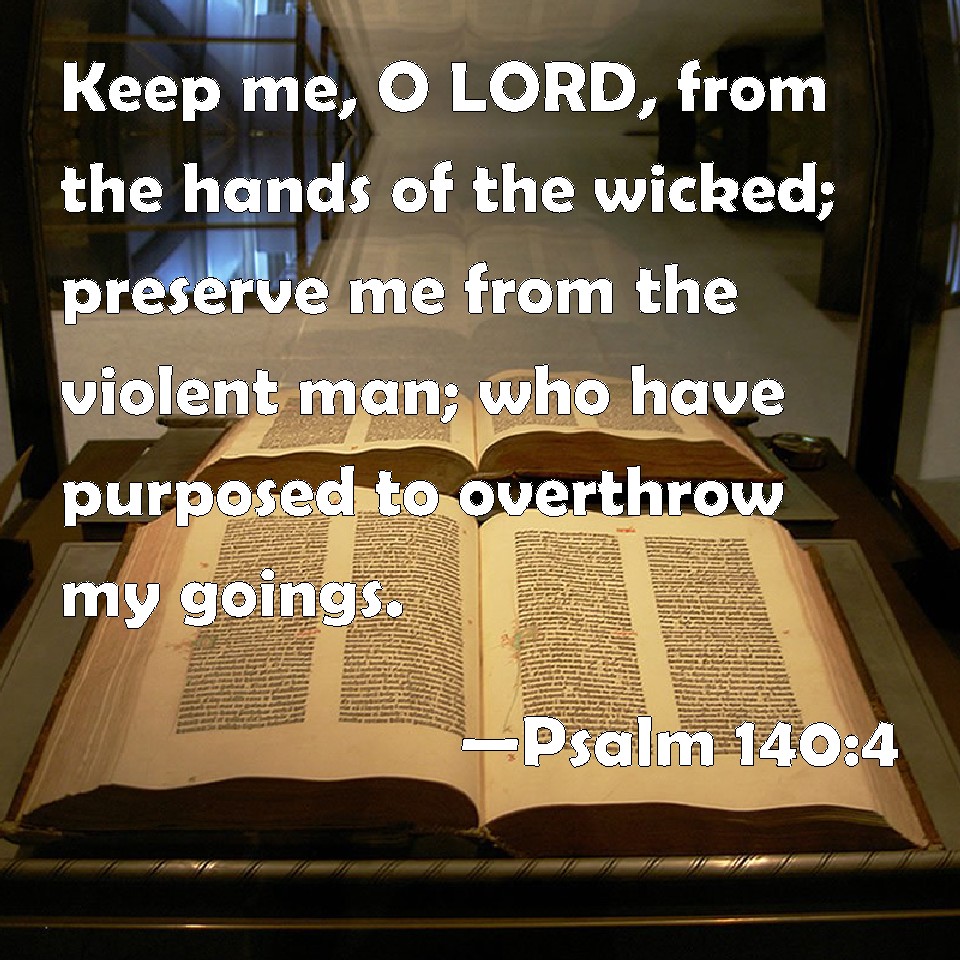
Thoughts on Psalm 140

As I've previously explained here on the blog and on my Facebook page, I have been richly blessed in recent months in reflecting on certain Scriptures along with a few friends. 

Our approach is simple enough – read the selected Bible book or passage, study it in whatever depth one has time for, consider personal applications of the text, and then post a few of one's own reflections on an email thread. Thus, everyone in the group (there have been 8-12 of us invited to that thread) can benefit. Using this method we have so far explored the Book of Esther, then Habakkuk, and now we're looking at three successive Psalms: 139, 140, and 141.

The invitation still stands for others who might want to join in. And with that introduction to the exercise, here's my latest on Psalm 140.

Dear friends,

While awaiting further responses to Psalm 139, Claire and I are also moving on to Psalm 140, one of those imprecatory psalms that unbelievers find so scandalous.  “How can a spiritual person pray for harsh judgment against others?” they ask.  And thus, standing in judgment of the Holy Scriptures, they defend unbelief and spiritual pride.  They assume that these imprecatory psalms and the Bible teachings on judgement, hell, etc., prove that they themselves are more compassionate and just and loving than is God Himself.  And then, having dismissed conviction, they conveniently dismiss all biblical matters and go their own way. Too bad.

Anyway, I’ll make my response to this spiritual exercise by doing two things. First of all, to share a perspective on praying against the wicked, I post a link to a brief essay I originally wrote 2 years ago for the blog. It’s entitled “Praying God’s Arrows Will Fly.” 

And secondly, stemming from this morning’s reading of Psalm 140, I give you 4 quick prayers that are applications for my life today.

1) Lord, as we take our stand against abortion outside Planned Parenthood today, please deliver us from “violent men who devise evil things in their heart.”  Rescue us from abortion zealots who hate us for our winsome witness for You -- whether they are employees, escorts, counter demonstrators, angry passersby, and so on.

2) Father, please protect me from those traps and nets and snares the enemy has set for me.  Guard me and guide my every step.  Keep me in humble dependence upon Your Holy Spirit so that I do only Your will and keep myself pure in heart, firm in the Faith, and obedient to Your every teaching. Don't let the devil steal my confidence, focus, joy, purity, focus, or any other blessing.

3) Father, defeat the schemes of the devil and his minions in our nation.  Let them not succeed but, in fact, let frustration, shame, and scandal be the outcome of their actions against You and Your anointed.

4) Keep ever in my mind, Lord, that You are righteous and just and all-powerful.  You WILL judge the wicked in holiness.  You WILL “maintain the cause” of Your people and reward them in due season.  Let me hold fast to Your promises, Your character, and Your enabling power to live always for You.